

If you’ve been following the news recently, you’ve probably noticed an increasing amount of coverage surrounding silica dust and the danger of quartz worktops. From national media reports to the recent debate in Parliament, it’s clear that this has become one of the biggest topics our industry has faced in many years.
As a company that fabricates and installs engineered and natural stone worktops every day, we felt it was important to share our thoughts on the conversation, explain what it actually means for our customers and, more importantly, outline how we’re continuing to prioritise the health and safety of our team.
Earlier this month we shared our first video on social media discussing why silica dust has suddenly become such a prominent topic. Many people watched the video and we received questions from homeowners, kitchen designers, builders and even other people working within the industry. One thing became very clear: there is a huge amount of confusion surrounding quartz worktops and silica dust.
Some people understandably assumed that because quartz was being mentioned in the headlines, the material itself had somehow become unsafe. Others wanted to know what the recent HSE guidance meant, while many simply asked whether anything had actually changed.
Rather than answering these questions one at a time, we’ve decided to launch a Silica Awareness Mini Series across our social media channels, where we’ll be exploring the topic in much more detail. Our aim isn’t to create concern around quartz worktops or other stone worktops. It’s to explain the facts, discuss the changes happening within the industry and show how responsible fabricators are continuing to improve the way they work.
Why Is Silica Dust Suddenly in the News?
The conversation around silica dust has grown significantly over recent months following a number of high-profile cases of silicosis among workers processing engineered stone, both overseas and here in the UK. On 2 June 2026, MPs debated workplace exposure to respirable crystalline silica in Westminster Hall, highlighting the need for continued improvements in worker protection, enforcement and industry standards.
Shortly beforehand, the Health and Safety Executive (HSE) published updated guidance specifically for businesses fabricating engineered stone and announced a programme of more than 1,000 inspections across the UK. For many people outside the industry, this was the first time they’d heard about silica dust. For those of us working with stone every day, however, silica is not a new issue.
Respirable crystalline silica has been recognised as an occupational health hazard for decades across industries including construction, masonry, quarrying, mining and concrete manufacturing. What has changed is the increased use of high-silica engineered stone and the industry’s growing understanding of the controls needed to protect those working with it. The debate isn’t about whether stone should be used, it’s about ensuring it’s fabricated responsibly.
Are Quartz Worktops Safe in Kitchens?
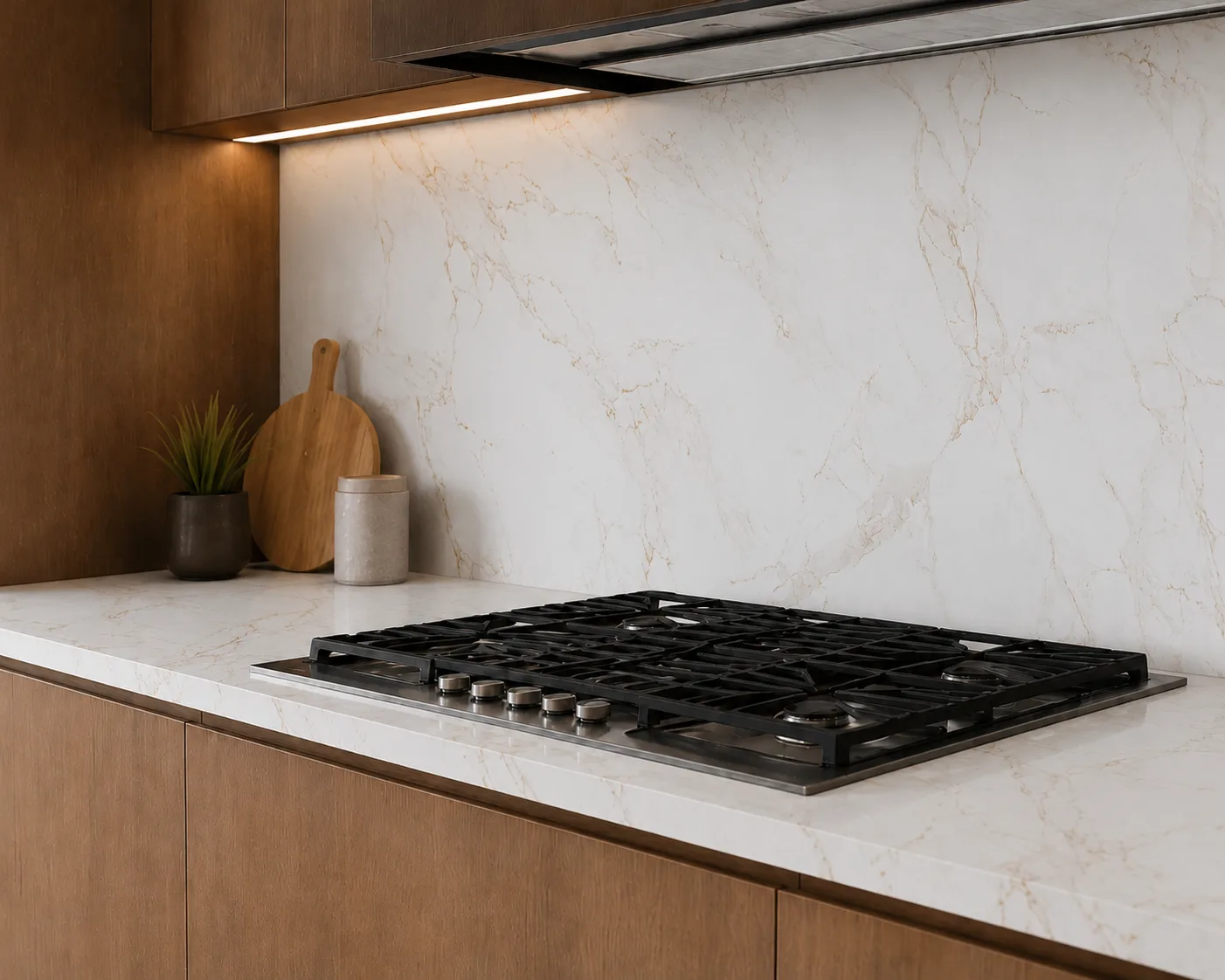
This has probably been the question we’ve been asked most often over the past few weeks. The simple answer is yes. Once a quartz worktop has been professionally manufactured and installed in your home, it poses no silica dust risk during normal everyday use, the concern relates to fabrication.
When stone is cut, ground or polished, extremely fine particles of respirable crystalline silica can be released into the air if suitable control measures aren’t in place. It is repeated exposure to these airborne particles over time that can lead to serious health conditions. This is why responsible fabrication is so important. Professional stone fabricators invest heavily in modern machinery, wet cutting systems, water suppression, dust control, respiratory protective equipment and staff training to minimise exposure. Unfortunately, when unsafe practices such as dry cutting take place in uncontrolled environments, they not only put workers at risk but also damage public confidence in an industry where the vast majority of businesses are committed to doing things properly.
What Has Changed Following the HSE Guidance?
One of the most significant developments this year has been the publication of dedicated HSE guidance for engineered stone fabrication. The guidance reinforces the importance of effective dust control and makes it clear that dry cutting engineered stone is unacceptable. Alongside this, the HSE has announced more than 1,000 inspections of stone fabrication businesses across the UK over the coming months. We welcome this. Higher standards benefit everyone. They protect workers, support responsible businesses and help improve confidence in our industry. At Portman Stone, we believe health and safety should never stand still. As guidance evolves, so should the way we work.
Launching Our Silica Awareness Series
Following the response to our first video, we’ve decided to continue the conversation by launching a dedicated Silica Awareness Mini Series across our social media platforms. Over the coming weeks we’ll be answering some of the most common questions we’ve received, including:
- What is respirable crystalline silica (RCS)?
- Why has quartz suddenly been in the news?
- Why is dry cutting so dangerous?
- What does the new HSE guidance mean?
- Is quartz still safe to have in my home?
- What role does the Worktop Fabricators Federation (WFF) play?
- How are responsible fabricators continuing to improve safety?
We hope the series helps homeowners, architects, designers, builders and fellow industry professionals better understand the difference between unsafe fabrication practices and responsible, professional manufacturing. Education has an important role to play in improving safety, and if our videos help answer a few questions and encourage more discussion, then they’ll have achieved exactly what we set out to do.
Working Together to Raise Standards
The recent Parliamentary debate has also highlighted the importance of collaboration across our industry. Organisations such as the Worktop Fabricators Federation (WFF), alongside the HSE, suppliers and fabricators, all have an important role to play in raising standards, sharing best practice and supporting continuous improvement. At Portman Stone, we’re committed to keeping up to date with the latest guidance, investing in safer ways of working and ensuring our team has the training, equipment and support they need. Health and safety isn’t something that’s ever finished. It’s something that’s reviewed, challenged and improved every day.
Looking Ahead
The recent attention surrounding silica dust has undoubtedly raised questions, but it has also created an opportunity for our industry. An opportunity to educate customers, support workers, raise standards and demonstrate that beautiful quartz worktops can be manufactured responsibly by businesses that put health and safety first.
Through our new Silica Awareness Mini Series, we’ll continue sharing honest, factual information about silica dust, modern fabrication methods and the changes taking place across our industry. If you have a question you’d like us to answer, we’d love to hear from you. Leave us a comment on one of our social media videos or get in touch with our team, and we’ll do our best to cover it in a future episode.